India’s Journey Toward Global Excellence in Critical Care
India’s healthcare industry has grown from being known primarily for cost-effective treatment to becoming a global name associated with advanced medical expertise, innovation, and dependable patient outcomes. The most remarkable transformation is visible in the field of critical care, where Indian hospitals now operate at the same level as internationally recognized medical centers. With world-class infrastructure, skilled professionals, and technology-driven systems, India consistently achieves outcomes that match global benchmarks.
Understanding Critical Care in India
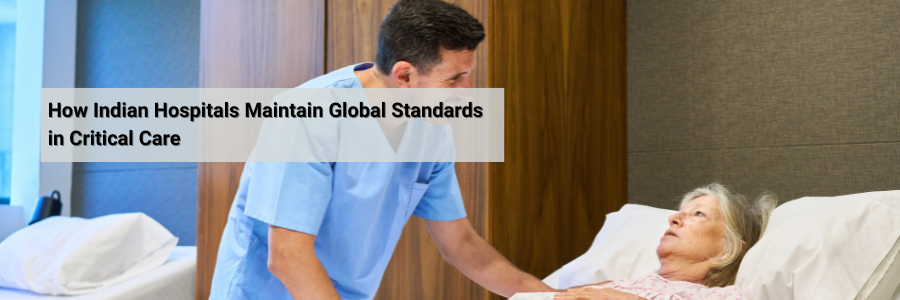
Critical care focuses on managing patients who require continuous monitoring and life-saving interventions due to conditions like septic shock, multi-organ failure, respiratory distress, severe trauma, and cardiac emergencies. ICUs and CCUs are equipped to provide round-the-clock, high-precision medical attention. In India, modern ICUs combine clinical excellence with compassion, protocol-driven treatments, and seamless team coordination to deliver high-quality patient care.
Accreditation and Global Compliance
International Certifications and Standards
Many Indian hospitals meet strict global benchmarks through accreditation from bodies such as JCI (Joint Commission International), NABH, and ISO. These standards help maintain quality in areas such as infection prevention, patient safety, clinical protocols, medication management, and ethical decision-making. JCI-accredited centers in India adhere to the same global operating standards used in leading hospitals across the U.S. and Europe.
Advanced Infrastructure and ICU Design
Modern Facilities Built for Precision
Indian ICUs feature advanced structural design and cutting-edge equipment that ensure accuracy, safety, and efficiency. They include:
- Modular ICU layouts
- Isolation and negative-pressure rooms
- HEPA-filtered ventilation
- Smart bedside monitors
- AI-enabled command centers
- Automated ventilators and defibrillators
These facilities significantly reduce infection risks and enhance the continuity of critical patient care.
Integration of Smart Technology
Digitalization is a major pillar of India’s critical care system. Hospitals now use:
- AI-driven monitoring tools
- Predictive analytics for early risk identification
- Electronic Health Records (EHR)
- Remote ICU (Tele-ICU) networks
This allows specialists to supervise cases across multiple regions, ensuring uniform quality across all hospital branches.
Highly Skilled Multidisciplinary Teams
Expertise Across Specializations
Critical care involves a coordinated approach by intensivists, anesthesiologists, trained ICU nurses, respiratory therapists, nutritionists, physiotherapists, and clinical pharmacists. Many Indian professionals hold international certifications and have worked or trained at globally renowned institutions.
Continuous Medical Training
Top hospital chains—including AIIMS, Apollo, Medanta, and Fortis—regularly host workshops, hands-on training, and global exchange programs. These continuous learning initiatives ensure that the medical staff stays updated with the latest advancements.
Infection Control and Patient Safety
Strict Infection Prevention Measures
Maintaining global standards requires strong infection control programs. Indian hospitals follow:
- Regular hand hygiene audits
- PPE protocols
- Surface and air microbial surveillance
- Sterilization monitoring
- Dedicated isolation zones
Antimicrobial Stewardship
To combat antibiotic resistance, hospitals follow structured antibiotic stewardship programs led by expert committees that continuously monitor and optimize antibiotic use.
Advanced Life Support Systems
Cutting-Edge Equipment and Technology
Indian ICUs utilize world-class medical systems, including:
- High-frequency ventilators
- ECMO (Extracorporeal Membrane Oxygenation)
- CRRT for renal support
- AI-powered cardiac monitoring
- Smart infusion pumps
These tools help improve survival rates and enhance treatment precision.
Simulation and Skill Development
Simulation centers allow teams to practice emergency scenarios such as trauma resuscitation, cardiac arrest, and sepsis management using advanced VR and high-fidelity mannequins.
Data-Driven Quality Improvement
Monitoring and Performance Audits
ICUs maintain detailed outcome data, including infection rates, ventilator-associated complications, and treatment timelines. Regular audits help ensure accountability and ongoing improvement.
Participation in Global Benchmarking
Hospitals collaborate in global and national networks like IRIS (Indian Registry of Intensive Care) to compare performance metrics with international standards.
Patient-Centered and Compassionate Care
Emotional and Psychological Support
Modern critical care is not only about medical technology—it prioritizes empathy and communication. Hospitals provide counseling, family support, and transparent communication to help relatives make informed decisions.
Integration of Palliative and Holistic Care
Many ICUs now include palliative support, mental health counseling, and rehabilitation planning, ensuring a comprehensive and humane approach to patient care.
The Rise of Tele-ICU in India
Expanding Access to Quality Critical Care
Tele-ICU platforms allow expert intensivists to monitor remote units through real-time video and data dashboards.
Bridging the Urban–Rural Gap
Hospitals like Apollo, Narayana Health, and Aster have developed strong Tele-ICU networks that bring high-quality critical care to smaller towns, ensuring equitable access.
Ethical and Transparent Medical Practices
Upholding Integrity and Trust
Ethical medical practices are central to global standards. Indian hospitals maintain transparency in diagnosis, consent, treatment planning, and billing, especially for critical and end-of-life situations.
Research and International Collaboration
Advancing Critical Care Through Research
Indian hospitals actively participate in global research, clinical trials, and multicenter studies focused on infection control, organ support, AI-based diagnostics, and more.
Knowledge Exchange and Conferences
Indian intensivists regularly attend global conferences such as ISCCM, enabling continuous learning and global alignment.
Emergency Preparedness and Response Systems
Lessons from the Pandemic
The COVID-19 pandemic pushed Indian hospitals to rapidly upgrade ICU capacity, streamline oxygen systems, and develop remote monitoring capabilities.
Disaster-Ready Frameworks
Hospitals now follow structured disaster management protocols that align with international emergency response models.
Affordability Without Compromise
Quality Care at Affordable Costs
One of India’s strengths is its ability to provide world-class critical care at significantly lower costs—often 70–80% less than Western countries—without compromising outcomes.
Global Medical Tourism Advantage
India has become a top choice for medical travelers seeking excellence, international accreditation, and affordability.
The Future of Critical Care in India
Innovation and Sustainability
The future of critical care in India includes AI-assisted clinical decisions, personalized medicine, robotic care systems, and eco-friendly ICU operations.
India’s Role in Global Medical Leadership
India is not just meeting global standards—it is influencing and shaping the future of critical care worldwide through innovation, research, and a strong commitment to quality.
Conclusion
India has proven that global quality and affordability can go hand in hand. With advanced infrastructure, skilled professionals, strict infection control, ethical practices, and compassionate patient-centered care, Indian hospitals are not only meeting global critical care standards but also redefining them. Patients now choose India not just for cost savings but for world-class expertise, safety, and trust—qualities that place India firmly on the global healthcare map.